 Social Media is big business. Not only for the companies themselves, but also for its millions of users who are using it to promote their businesses. So don’t let it affect your reputation! Take advantage of these top Facebook Tips for ADIs.
Facebook Tips for ADIs – Social Media Experience
Having in excess of 1,000 ADI Facebook friends, I am in a privileged position to share thoughts, information and ideas with others in an instant, learn new things, gauge opinion by asking a question, or even advertise to my target audience if I need to. But it would be very easy to alienate myself from my colleagues and potential customers if I wasn’t careful about how I use this fantastic (and free!) network.
Now I’m certainly no expert, but over the years I have noticed a fair few ADIs who are far less careful, and I have seen reputations tarnish within seconds of posting an inappropriate comment or picture. This article is by no means intended as an attack on these individuals – in fact, quite the opposite! I write it in the hope that ADIs new to Facebook can learn from the mistakes of others (including myself – I’m no saint!), and avoid pressing the ‘self-destruct’ button when it comes to joining the wonderful Social Media revolution.
Protect your Business Reputation using Top 7 Facebook Tips for ADIs

TIP 1: Your Profile Picture… Serial Killer? Porn Star? Professional ADI?
You know that old cliché, “you never get a second chance to make a good first impression”? Well, guess what? It’s true. For those who have never met you before, your profile picture is the single most important factor in helping them form their initial opinion of you.
If you’re already on Facebook, what does your profile picture say about you? Approachable? Professional? Friendly? Trustworthy? Remember – your photo is seen by everyone, and that includes potential customers and colleagues. Sure, you may look mighty hot in a skimpy bikini (and that goes for the ladies as well), but is this the first impression you would like to give to a potential client? Is this how you’d greet them on their first lesson?
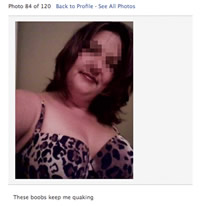 Be choosy about your photo, and ask a few other people before you make your final choice – if I was a potential pupil and you looked like a criminal, porn star or drug addict, I think I’d be taking my business elsewhere!
TIP 2: Avoid suicidal status updates
“Had a ******* prick driving up my ar*e on last lesson tonight… gave the **** a right mouthful when he pulled up alongside us at a set of lights”
“Was teachin a rite muppet 2day. Crunched my gears about 50 million times + hit the kerb 3 times. Why did he av to cum learn wiv me FFS????”
Once people have seen your picture and you have been added as a friend, the next thing that they’ll undoubtedly read is your status updates. Although fictitious, the above two are typical of some that I read on a regular basis. Do these status updates give off a good impression?
It’s probably also a good idea at this point to suggest staying away from posting your opinions on sensitive topics such as politics, religion or racial issues. Remember, others may not take kindly to your views, and this is a sure-fire way to lose friends and even tarnish your reputation.
TIP 3: Share your sensible sense of humour!
I personally think a sense of humour and fun in the world of social media is essential. Making people laugh means that they will return to read your status updates time and time again. I can think of a few Facebook friends in particular who regularly post humourous anecdotes – I love reading them!
But in the same way that ‘sensitive issues’ can rub people up the wrong way, posting a distasteful joke you received by text message about a dead celebrity on your status or the joke that your mate told you in the pub last night after a few pints can have exactly the same effect on your kudos. Sure, some may find it funny, but many may not. Steer clear!
I tend to use the ‘Grandma Test’ before posting a joke or anecdote online – would I tell it to my elderly Grandma? Sometimes I come across a fantastic joke or YouTube video, but since I use my Facebook profile for business, have to think twice before posting it!
TIP 4: Be honest
“I have a 95% first time pass rate”, “I’m rated by the DSA as number 1 ORDIT Trainer in the UK”
I see dodgy claims like this all the time. But before you post a blatant lie or exaggerated claim on your Facebook status, think again.
 Since 1st March 2011, the Advertising Standards Authority (ASA) has had powers to police the claims companies make on websites and social networks.
Not only do such claims undermine you as a professional, they could land you in a sticky situation with the ASA.
TIP 5: Have a personality, but avoid being personal
I think it’s important that others see your ‘human’ side – it can help build rapport if others can relate to your comments on a personal level. So feel free to share interesting things about your day and what you’ve been up to in your free time, particularly if you think it will be of interest to others.
I like to read about people’s social lives – it makes me realise that I really need one! But bearing in mind your profession, THINK about the potential pitfalls before posting how much you had to drink last night and how you don’t remember how you got home. THINK before posting status updates when you’re drunk. THINK about the impression your status updates and posts will give to others who may not know you so well.
At the far end of the scale, some like to use social media to vent their personal problems – do colleagues and potential clients really need to know that your ex-partner is a loser or all the juicy details about last night’s sexual endeavours?
TIP 6: Beware of the ‘Misinterpretation of Communication’!
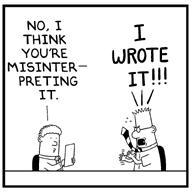 It’s easy to inadvertently upset someone when posting a message online – you only have to take a look at the millions of internet forums to see this happens on a daily basis, even if the poster didn’t mean any malice in their comment.
“The meaning of any communication is the response it gets”. In other words, it’s not what you say that matters, it’s how it is interpreted. I have to remind myself of this sometimes, having forgotten this very fact and inadvertently offended someone by a totally innocent comment. So once you have written something in text format, read it again. Could what you typed be taken out of context? I often find it helpful to add a smiley to the end of the comment, which can help infer the tone in which it should be taken 🙂
TIP 7: Be mindful of what you click on
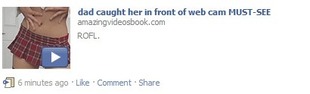 Tempted to click on that video of some hot naked chick on a webcam? Go ahead (if you want the rest of the world to know you’re a pervert!) Generally, links like the one on the right are designed to entice users to click on them, which inevitably turns out not to live up to its expectations and instead spam you with adverts and popups.
As if that wasn’t bad enough, the ultimate public humiliation comes when the innocent click leads to an internet ‘trojan’ or ‘worm’ posting the depraved link to all your friends on your behalf. Nice!
Two simple solutions!
Aside from the above, there are a couple of easy ways to keep your personal things private, which can allow you freedom of expression without fear of damage to your reputation:
- Set up a separate business profile, and keep your personal one for friends/family only – then you can be as crazy as you like!
- Control what parts of your profile your business clients and colleagues can see by creating friends lists. For example, I have “ADIs & PDIs I know” “Non-Personal ADI Contacts” and “Limited Profile”. I can separately control which parts of my profile each group can see, which photos they have access to, who can view my status, etc.
Final word on staying safe
Rarely a week goes by without me reading about someone’s upcoming holiday and how excited they are about it. My first thought is usually an envious one – he/she is getting a holiday whilst I’m seemingly working 24/7. My second thought is fear. What some fail to recognise is that potential criminals use this fantastic information to target unoccupied homes, and empty them, safe in the knowledge that they won’t get disturbed by the homeowner.
Facebook Places is a new and funky feature that you can use to tell people where you are, too. Very handy for would-be criminals – they can see exactly where you are and when you’re likely to be home!
 If you think only close friends and family can view your status updates, think again… who is looking over their shoulder? Are they using a shared computer to log onto Facebook? What if your Facebook friend’s mobile phone is stolen, which they regularly use to access social media sites? If you want to tell people about your holiday, do it when you get home! Even if your address isn’t on your Facebook profile, with internet technology it’s VERY easy to find out where you live.
If you enjoyed this article on Facebook Tips for ADIs and saving your business reputation please share it with your friends and business associates.
