On this page, we have listed some helpful resources for you, which will help you prepare for your ADI Standards Check.
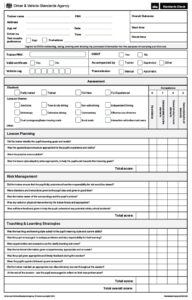
ADI Standards Check marking sheet (SC1)
The marking form that is used in Approved Driving Instructor (ADI) Standards Checks.
A full breakdown of each competency listed on this form is provided in Chapter 4 of the ADI 1 document (below)
Click here to download the Standards Check marking form
 Guidance for driving examiners carrying out instructor tests (ADI1)
The guidance that driving examiners follow when carrying out instructor tests in Great Britain.
See Chapter 4 for Standards Check guidance.
Click here to download the ADI 1 document
 The National Standard for Driver & Rider Training (NSDRT)
The NSDRT defines what you must be able to do and what you must know and understand to provide training to drivers and riders.
The Standard is the document on which the Standards Check is based, so it really is important that you know, understand and are able to provide training according to the Standard.
Click here to download the National Standard for Driver & Rider Training
 HERMES Project – Report
Some of the most significant developments in the education of new drivers, and indeed in the changes to the ADI Standards Check, stemmed from the work of many projects co-financed by the European Commission. One of the most notable pieces of research was conducted via the HERMES (‘High Impact Approach for Enhancing Road Safety Through More Effective Communications Skills’) project.
The outcome of the HERMES project was a highly practical training package containing suggested scenarios which new and experienced driving instructors could follow. The main recommendations were based on the driver trainers adopting ‘coaching’ principles, rather than traditional ‘teaching’ methods.
The website you can find all the HERMES resources on is: www.alles-fuehrerschein.at/HERMES/ but you can download the main report by clicking the link below.
Click here to download the HERMES Final Report

HERMES Project – Video
A video was also produced by the HERMES team. This is a great watch and it will give you some good ideas of things you can integrate into your driving lessons.
Click here to download the HERMES Video
Please let us know of any other resources you think we should list here!
If you found this page useful, please hit one of the SHARE buttons below. Thanks!
 It’s a question we occasionally get asked – “How do I complain about a driving examiner?” Thankfully, we are hearing of fewer and fewer instances of people having issues with examiners’ bad attitudes towards driving test candidates and driving instructors. We have personally found most examiners to be very friendly, professional and approachable. This is likely to be down to the DVSA’s increased emphasis on providing excellent customer service. In this article, we explain how driving examiners are trained and continually assessed. We also look at how you can express your concerns or even complain about a driving examiner, should the need arise.
 As the seconds passed, he glanced impatiently at his watch whilst Ben gathered his belongings. By this point, Ben was visibly shaken, sweat forming on his forehead, blushing, and rippling with fear. Hardly able to keep his hands steady as he did so, he removed the paper counterpart and plastic card from the DVLA stamped plastic wallet and handed it to John.
 We all have bad days
 During a recent visit to the DVSA’s Training & Development Centre in Cardington, Bedfordshire, we learned more about the examiner training process and we asked a senior trainer to what extent personality traits and attitudes are taken into account when examiners are trained. We also learned how the DVSA openly welcome feedback from driving instructors and driving test candidates, especially when someone feels the need to complain about a driving examiner due to their attitude or general manner.
 The ‘customer service’ element looks at how the trainee examiner relates to, and communicates with, everyone else during their 4-6 week training course. In life beyond the course, everyone that examiner could come into contact with in their working life is defined as the ‘customer’. This, of course, includes learner drivers and their instructors.
 When training and assessing candidates for driving examiner positions, senior training staff at Cardington are looking for people with specific personal characteristics and customer service skills. They need to have a calm confidence, especially when in confrontational situations. But they equally need to be reassuring when dealing with test candidates who have emotional outbursts.
 The training team at the DVSA acknowledge the fact that no matter how many assessments, role plays and Check Tests are conducted during training and whilst out there on the job, trainee and qualified examiners are often able to ‘play the game’ when being assessed. Their actual conduct whilst out there on the job could be something entirely different. During a trainee examiner’s initial training programme, the environment at the Training Centre is very positive, and as such, the trainee examiners’ behaviours are positively influenced by those around them.
 If you or your pupil have an issue with an examiner’s customer service skills, the first point of contact should be with your LDTM. If you are unsure who that is, check on the local notice board in your driving test centre. If it is not there, you could either ask another examiner for the contact name and number of the LDTM, or call the DVSA on 0300 200 1122 and ask the advisor for the information.
 Thankfully, Claire and I have personally found examiners’ customer service skills to be excellent, on the whole. On the rare occasion that we have encountered issues, we have never been afraid to confront this issue, either directly with the examiner themselves or by contacting a more senior member staff at the DVSA. Incidentally, we have never defined the reason for our contact as being a ‘complaint’ – instead we discuss our ‘concerns’ or ‘observations’. Each time we have done so, the senior examiner has been very grateful for our feedback and has followed up on our concerns. In each and every case, we have found noticeable improvements, with no open detriment to that examiner’s attitude towards us.
 How do you find customer service at your local test centre?
 Reflective logs (or journals) are nothing new – they have been used very successfully for many years in other educational establishments, including some primary and secondary schools. Therefore, it’s quite possible that your pupils will be very familiar with the process, even if it might feel alien to you.
 This enabled me to keep a track of not just what we covered and when, but specifically how well my pupils carried out those tasks and where they needed to improve. Together, we would then plan what to cover next lesson (although admittedly I frequently ‘led’ the pupil with this decision).
 It is most beneficial for the pupil to write the log themselves so that they don’t censor their thoughts and feelings. However, as long as the record is a true and honest reflection of the pupil’s thoughts and feelings, it shouldn’t matter too much who does the writing. Personally, I have found that most clients prefer me to take the notes whilst they are reflecting on the progress and expressing their thoughts verbally. I then summarise what they’ve said and enter it onto the log. This also saves lots of time.
 Make it a normal part of your lesson and your pupils will accept it. In every educational setting, lessons have a start (recap), middle (learning) and an end (recap/debrief), so why should driving lessons be any different?
 Some instructors supply each of their pupils with a ‘Starter Pack’ when they start lessons (which might include a branded pen, terms and conditions, Highway Code, referral vouchers, etc). Adding an inexpensive blank notepad to this pack, labelled ‘Reflective Learning Record’ is one idea. Who keeps the learning record is entirely up to you, although in my experience 17 year olds can be quite forgetful. If you intend to leave the learning record with your pupil, you’ll need a plan in place for when they forget it, or it gets ‘eaten by the dog’.
 The DVSA have conveniently supplied a sample reflective log in their
  You could
 If you have access to an iPad, check out the ‘
 There are also many advantages of using a Facebook business page – insights, customer star ratings, reviews and advertising being just a few. For a list of 14 benefits of a Facebook Business Page over a Personal Profile, take a look at
  In the Facebook header bar, click on the drop down arrow on the far right and click ‘Create Page’. It’s probably best to opt for a ‘Local Business or Place’ as you will be wanting to let people know where you are based. Although your address will show on your page, you don’t have to add your house number if your work address is the same as your home address. On the category dropdown list, just opt for ‘Local Business’ for now. Complete all your details and click ‘Get Started’.
 Choose an appealing profile picture. A smiley picture of you in your car will appeal to potential customers. People buy from people so make your page as personable as possible. Using your company logo isn’t usually a good idea – your potential clients aren’t interested in a logo – they want to see who they are going to be buying from. If you’re photo-shy or perhaps feel your photo might turn potential customers away, then perhaps use a photograph of a happy pupil, smiling broadly with their driving test pass certificate. Please don’t be tempted to rip a photo from Google images or use a stock photo – your profile image is your first point of contact from which your potential customers will glean their first impression. Make sure it’s a good one!
 Make sure you also utilise the ‘About’ section on your business page. Let potential customers know that you can offer what they want. The about section also lets you add hours of opening, a contact number and links to other social media sites that you may use (Twitter, Pinterest, Google+, Instagram, etc). Make sure you include links to your company website.
 Use your cover photo wisely. Again choose an appealing photo for your cover but then add words including a clear call to action. For example, below you can see the cover photo we used this Spring on our Facebook business page – ‘Call us now and pass for Summer! 0161 345 3452’. Also make sure you add a description so when people click on the cover image there are more details and further calls to action, e.g. ‘Start learning now and take advantage of our great deals! Call us: 01234 567 890, Visit our website: www.drivingschool.com, Follow us on Twitter: @drivingschool’
 So that’s how to set up your Facebook page in 6 easy steps. Easy, wasn’t it?!
 “Hi, Ged & Claire. Like most ADIs, I really enjoy all your articles and posts, so keep it up! I was, however, wondering if you could offer some advice on improving driving test pass rates…
 If you want to know what you’re good at and what you could improve on, measure your results. Taking a photo of the driving test report or copying a test report onto a blank one will allow you to keep records of what your learners are picking up faults on. Is there a trend? When I did this, I found that I was getting quite a few driver faults on mirrors, including the odd serious one. I decided to remove my eye mirror, and the learners became aware of when I was watching them. This prepared them for being watched by the examiner, and also became a subliminal prompt. After that, my mirror faults decreased significantly!
 This has always been a particular challenge for me. Even on ‘mock’ tests, and certainly in the lessons on the run up to the test, it’s easy to overlook how much help you are actually giving your learners. Getting them used to total independence for set periods of time will not only prepare them for the test conditions, but also give you insight into how much you actually help them without thinking about it!
 Tip 5 – Say NO!
 Top 8 – Deal with test day ‘nerves’
 Time is precious. And for driving instructors, lost time equals lost income. Using the top ten tips to Reduce Driving Lesson Cancellations can save you time and money. Yes, it’s great to be able to catch up on other essential business matters when last-minute lesson cancellations arise, but we all have bills to pay. So what can we do to minimise cancellations and loss of income? Here are 10 top tips:
 Outline the conditions for cancellation (see below) and end the conversation by simply asking for their verbal understanding, “so are we OK with that, or do you need me to clarify anything?”
  Make your terms and conditions easily available, have them on your website and appointment cards. Go through cancellation policies at the time of booking and/or on the first lesson. Even so, it can be hard to enforce and if reliable customers have a genuine reason for cancelling, waiving the cancellation on that occasion can make good business sense. You don’t want to lose an otherwise reliable customer all because you charged her for a lesson when she was in hospital with her son.
 “Yes Ged, I tell them that they have to give me 48 hours’ notice of any cancellations, otherwise I’ll charge them. But obviously if they’re ill, I don’t want their germs, so it’s fine to cancel then” When I asked him what the pupils’ reasons for cancelling that week was, can you guess what his reply was? Yes, you got it – “they’re all ill”. Hardly surprising, was it? It’s a good idea to waive the lesson fee if your pupil is genuinely poorly, but don’t tell them in advance that this will be the case, or else the same excuse will be used every time they just can’t be bothered with their driving lesson!
 When lessons are moved around a lot it’s easy for the pupil to ‘forget’ when their lesson was or double book that lesson time with some other commitment. Also, bear in mind that if you keep changing their lesson time around from week to week, they’ll expect you to allow them to do the same. Having said that, do bear in mind that learners will benefit from experiencing driving at different times of day, so moving a lesson time to another ‘regular slot’ for a few weeks should work well.
 It’s much easier to charge for cancellations when you have the money up front. Block booking discounts offer an incentive for customers to pay for 10 hours at a time, but is your incentive enough? We noticed a big difference in the amount of pre-payments for blocks of 10 hours when we put our hourly rate up but kept the block booking the same. Instead of a £10 discount, customers get £20 discount (almost the price of a 1 hour lesson!). Now customers are much more likely to take advantage of the £20 saving.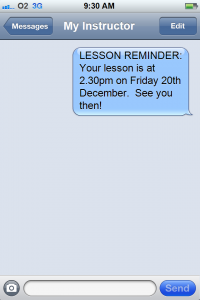
 “Hi Ged & Claire. What do I do about a pupil that doesn’t seem to want to learn? He keeps paying me for lessons, but pulls up and demands to get out for a smoke when things aren’t going so well. I think he spends more time smoking than he does driving. I really feel like I’m wasting my time with him and I hate feeling like this. I love my job and I just want to teach! But how can I motivate him to want to learn?”
 During his lessons, Marc seemed quite disinterested. He seemed to ‘plateau’ for a few lessons, and I was struggling to help him to improve. At the end of one particular driving lesson in which Marc hadn’t really shown much improvement, we pulled up outside his house. He wasn’t forthcoming with his feedback when I encouraged him to self-reflect on his progress. So I chose to ask him, “Why is it you want to learn to drive, Marc?” “I don’t”, came his reply. “So why are you having driving lessons?” I asked him. “Cos my dad wants me to”. Marc’s dad ran a successful Italian restaurant and a takeaway pizza parlour. It turned out that Marc’s dad had him lined up to do the pizza deliveries, hence was financing Marc’s driving lessons.
 To be quite frank, I didn’t enjoy teaching Marc. He was the perfect definition of what I would term a ‘mood hoover’ or ‘energy vampire’ – over the course of a 1 hour driving lesson, he had this amazing ability to suck every piece of enthusiasm out of me and turn me from a happy, inspiring, smiley driving instructor to a sullen-faced, unmotivated instructor, who felt like packing it all in and getting a ‘proper’ job.

 OK, I know this week’s article is a little bit ‘off the wall’, but bear with me – there’s a serious point to it!
 So here it is – my favourite slow cooker meal: Slow Cooker Chicken Chilli. And it’s absolutely IDEAL for ADI’s because it’s super-quick and easy to make – simply whack it all in the slow cooker and when you come home 8 hours later, it’s done, perfect for ADI Meals and healthy eating.
 That’s it. Easy peasy! At the end of a day out on road, take a portion out of the freezer and defrost thoroughly in the microwave. Once defrosted, turn the microwave onto full power and cook until piping hot. Serve with a jacket potato, rice, cous cous, nachos (or some chips!) – whatever takes your fancy.
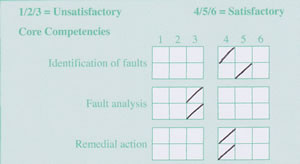 “Hi Ged & Claire. I failed my ADI Part 3 test last week and the examiner told me that although I spotted all his faults and tried to fix them pretty well, my fault analysis needed work. But I’m not sure where I went wrong, because I did what my trainer had told me. For every fault, I asked him why he did it, but he just said, “I dunno” or “not sure”, and at one point he acted really defensive. Is my trainer right, or was my examiner just having a bad day?” Jim (PDI)