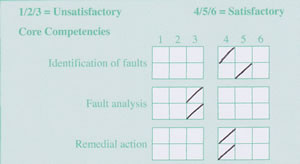
 “Hi Ged & Claire. I failed my ADI Part 3 test last week and the examiner told me that although I spotted all his faults and tried to fix them pretty well, my fault analysis needed work. But I’m not sure where I went wrong, because I did what my trainer had told me. For every fault, I asked him why he did it, but he just said, “I dunno” or “not sure”, and at one point he acted really defensive. Is my trainer right, or was my examiner just having a bad day?” Jim (PDI)
Fault Analysis ADI Part 3
Thanks for your question, Jim. Fault analysis, the second of the three main core competencies on the ADI Part 3 test and ADI Check Test, is often an area of weakness for PDIs and ADIs, so hopefully I can help clear things up for you!
To explain the basic principles of the core competencies in simple terms, imagine you have terrible stomach pain and decide to pay a visit to your local GP. After entering his room and briefly explaining your symptoms to the doctor (IDENTIFYING the problem), what would his next step be? Is he likely to ask:
a) “Why do you have stomach pain?” or
b) “When did the pain start? Where is the pain, specifically? Are there any circumstances in which it is better/worse?”
 “Hello Ged, I’m looking to get your opinion on the “use of car indicator signals”. A discussion has started up in our local association with regards to following traffic and giving signals.
 “Hey Ged.. I got a really difficult pupil later. Good control of the car but in a ‘boy racer’ way. Very impatient, slightly aggressive to other road users, especially cyclists. He does know all the dangers/hazards but has the ‘it’s their own fault’ attitude. Any advice for dealing with difficult learner drivers?”