 A newly-qualified instructor recently asked me what they need to do on test day, so I decided to put down some helpful test tips for driving instructors so others can benefit from them too. If you’ve been teaching a while and have any other tips to share, please add them in the comments box at the bottom of this post!
Getting ready for driving test day starts well before the day itself. As an instructor, you want to make sure that everything is in place ready for your pupil’s practical test. Here are some tips so that test day goes as smoothly as can be for both of you.
Helpful Test Tips for Driving Instructors
As soon as the test booking has been made…
TOP TIP 1: If your pupil has booked the test themselves, ask them to print off and bring confirmation of booking (email or letter) to their next lesson. Double-check that the date, time and test centre they have booked are correct.
2-3 weeks before test day…
TOP TIP 2: Ask the pupil to bring along both parts of their driving licence to a lesson for you to check. This will make sure they know exactly where they are and won’t be rushing around trying to find them on test day! You might even want to ask them where they will put them and make a note of their ‘safe place’. It’s amazing how many say ‘I put them in safe place… I just can’t remember where!’
 TOP TIP 3: Check the pupil’s eyesight – it may have deteriorated since the initial check you did with them on their first lesson. If in doubt, refer them to an optician.
TOP TIP 4: Run through the safety check questions, making sure they can open and close the bonnet without your assistance.
TOP TIP 5: Let the pupil know that you can sit in on their test. You can be there to see exactly what happens on their test and give extra feedback at the end as they probably won’t listen to the examiner properly after hearing they’ve passed! Letting them know about this before test day will allow them to decide if they would like you there or not rather than being put on the spot in the test centre on the day. Also let them know that a supervising examiner will need to sit in on tests from time to time. Reassure them that the supervising examiner will be there to assess the examiner conducting the test only, and they won’t actually be ‘tested’ by two examiners! It may be an idea to practice carrying a passenger on a lesson or two so they get used to having an extra person in the car.
The day before test day…
More test tips for driving instructors.
TOP TIP 6: Advise the pupil to get an early night, have something to eat on the day of the test, and make sure they’re drinking enough (non-alcoholic!) fluids to keep properly hydrated.
TOP TIP 7: Check your car over. I know most of this goes without saying, but check all the lights are working, check the tyres have sufficient tread depth, are correctly inflated and free from cuts/bulges, check fluid levels, washers and wipers and make sure you have a valid tax disc displayed. Make sure your car is clean and tidy. Finally, make sure the L-plates are on! Obvious I know, but if you take off your roof sign whilst cleaning the car, it’s easy to forget to put it back on, especially if it’s out of sight! Carry a spare set of L-plates in case one goes AWOL and a spare set of bulbs in case you need to make a last-minute bulb change (assuming your car doesn’t need almost complete dismantling to do so, like some do!).
 The big day!
TOP TIP 8: Make sure your pupil has:
- Either both parts of their driving licence (check the issue numbers match), or their old-style paper licence and valid passport;
- Any recent change of address filled in at the bottom of the counterpart;
- Theory test pass letter;
- Booking confirmation (again check test centre, date and time);
- Glasses or contact lenses, if required;
- Drink/food (bananas are a great natural energy booster). Dehydration leads to poor levels of focus and concentration, so it’s worthwhile you having a fresh bottle of water to hand in case they’ve not had much to drink that day;
- Anything that may help them keep calm, e.g. music, childhood teddy, herbal calming remedies, bottle of vodka (only joking!)
TOP TIP 9: Aside from the necessary paperwork, put all valuables, handbags/man bags/rucksacks in the boot out of sight. You don’t want to be doing this at the test centre in full view of any ‘rogues’! It’s a good idea to encourage pupils to leave their valuables in the boot throughout the test rather than leave them on view on the back seat. Thieves are great opportunists and the car will be stationary several times on test.
TOP TIP 10: Use the pre-test time wisely. This will depend on the needs and desires of your pupil. Some won’t want a full 1 hour lesson before test as they may get tired. Others may like the full hour as a warm-up and to go over any last-minute concerns. Some may benefit from you giving a demo-drive with commentary, others will benefit from a tea or coffee. Make the decision between you as to what will work best for them.
 TOP TIP 11: If you do opt for a regular pre-test lesson, keep it simple – mistakes may occur due to pre-test nerves and lacking 100% focus on the driving task. This is absolutely normal, so let your pupil know beforehand that it’s normal too. It can be a good idea to avoid doing any manoeuvres at this point – if one (or more) goes wrong, the pupil may go into meltdown! Stay close to the test centre area prior to the test, particularly if it’s not your regular test centre and aren’t familiar with the area or there are lots of road works.
TOP TIP 12: Be positive with your language. Prepare your pupil’s mindset for success rather than failure. Encourage the pupil to be positive, focussing on WHEN they pass rather than IF they pass. Reassure them that if they make a mistake it doesn’t mean they have failed, so they should forget the mistake and carry on so they can minimise any further errors. Let the pupil know that the examiner will write on the test sheet throughout the test – this doesn’t necessarily mean the pupil is making mistakes – the examiner just needs to mark off what has been covered throughout the test to make sure he has assessed everything required.
 TOP TIP 13: If your test centre doesn’t have toilet facilities, ask the pupil in plenty of time if they need a toilet break so you have time to call at a supermarket or fast-food restaurant. Let the pupil know that the test centre doesn’t have toilet facilities so that they realise the importance of letting you know in advance. Nervousness can cause all sorts of ‘toilet trouble’, so be sensitive to the fact your pupil may need more than one visit! Another one of the important test tips for driving instructors.
TOP TIP 14: Arrive at the test centre 5-10 minutes before the test appointment to make sure you can find somewhere to park in plenty of time, allowing time for other learners’ to bay park if your test centre has a car park. Many test centres request that test candidates arrive no earlier than 10 minutes prior to test to avoid congestion in the car park, so do take note of any notices in the waiting room to such effect.
TOP TIP 15: Check if your pupil wants you present on test, if not, ask if you can be present at the end to listen to the examiner’s debrief.
TOP TIP 16: In the test centre, make sure your pupil has both parts of their driving licence ready for the examiner to inspect (remove it from any plastic wallet or envelope).
TOP TIP 17: If you are sitting in on test, sit behind the driver or behind the examiner – whichever you prefer (each have their benefits). You must make no attempt to communicate or signal to your pupil and keep movements to a minimum. If the examiner suspects you are trying to help the pupil, the test will be terminated. So no coughing every time a mirror check is needed!
TOP TIP 18: If you have not sat in on the test, be nearby when your pupil returns. Make sure you’re in view of the examiner. Wait until the examiner signals to you to come over to listen to the debrief – due to data protection laws, they need to first check with your pupil that they would like you present for the debrief.
 TOP TIP 19: The majority of the time, an instructor will drive their pupil home after the test to allow them time to relax after passing (or sob after being unsuccessful). This can also be a time for them to phone friends and relatives to let them know of the result. Bear in mind that it’s a good idea for you to remove your roof sign and/or L-plates if your pupil will be on the phone – it’s amazing how many members of the public will incorrectly assume that “the instructor in that car gives lessons whilst on the phone”.
TOP TIP 20: Some instructors allow their pupil to drive home after test – this is a great opportunity for newly-qualified drivers to experience driving with extreme emotion, whether that be elation, giddiness, happiness, frustration, anger or sadness. In a safe environment, you can help the pupil become aware of how their emotions affect their driving, what the consequences might be and discuss what they can do to keep safe on the roads when feeling emotional. It might just help them make the right decision about getting behind the wheel when emotionally-charged at some point in the future when you’re not there with them. There should be no insurance issues if the drive home after test is used for driver development – many driving school insurance policies will prohibit under 25’s from driving for social, domestic or pleasure purposes, so make sure the time is used for the correct purpose.
Our test day faux pas!
Read this and use the test tips for driving instructors to avoid costly problems like these below on testing day.
Turning up a day late for a test after trusting the date and time my pupil had told me. Lesson learned: always ask to see their written confirmation!
Unbeknown to me and my PDI, whilst checking her driving licence on the walk over to my car, the card part fell out of the plastic wallet and it was left in the car park. Lesson learned: always ask them to show you their licence and let them keep hold of it. An expensive £111 lesson for me!
Finding out that a brake light on the PDI’s car is not working 10 minutes before a Part 2 test. Lesson learned: Regardless of how new or old a car is, or who owns it, ALWAYS carry out a thorough vehicle check. Also know where the nearest garage is!
Driving off from the car wash without my L-plates! Lesson learned: always carry a spare pair!
Booking a test at a test centre I have never used before and then wandering too far away from the test centre and getting lost! Lesson learned: stay close to the test centre area and/or have the address already programmed into the sat nav.
 CONFESSIONS OF A DRIVING INSTRUCTOR! What driving test day blunders have you made or witnessed? Please share so others can learn from them (and perhaps have a chuckle at the same time!)
Finally, if you liked this article and know someone else that could benefit from it, please hit one of the social media sharing buttons!
 Things have changed a lot in the 16 years I’ve been part of the driving instruction industry, and the way in which I have run my driving school has had to change keep up. One thing that hasn’t changed though is my definition of success.
 4 years later in 2001, I set up a driving school with a business partner, Glyn. We looked to build a multi-car school. This went from strength to strength, with 26 instructors at the height. So what did we do to ensure that outcome?
 Changes we made:
 What doesn’t work well?
 What can work:
 What does work (for us anyway!):
 Social Media is big business. Not only for the companies themselves, but also for its millions of users who are using it to promote their businesses. So don’t let it affect your reputation! Take advantage of these top Facebook Tips for ADIs.
 The Bay Parking Manoeuvre (bay park exercise) can be one of the most frustrating to teach and to learn. Getting the car in between the two white lines first time isn’t always easy, especially from a 90 degree angle to the bay, and when there are no other parked cars in the adjacent bays to help guide you.
 Wouldn’t it be great if we could help reduce or even eliminate the crash rates for young drivers?
 Driver ‘Coaching’ is seen as a dirty word by some driving instructors, not surprising with some of the industry media attention it’s attracted. But can all instructors embrace the benefits of coaching? Do you think you use coaching already? Read on and decide for yourself!
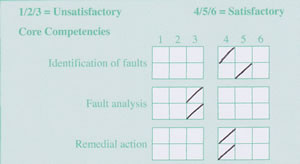 “Hi Ged & Claire. I failed my ADI Part 3 test last week and the examiner told me that although I spotted all his faults and tried to fix them pretty well, my fault analysis needed work. But I’m not sure where I went wrong, because I did what my trainer had told me. For every fault, I asked him why he did it, but he just said, “I dunno” or “not sure”, and at one point he acted really defensive. Is my trainer right, or was my examiner just having a bad day?” Jim (PDI)
 “Hello Ged, I’m looking to get your opinion on the “use of car indicator signals”. A discussion has started up in our local association with regards to following traffic and giving signals.
 “Hey Ged.. I got a really difficult pupil later. Good control of the car but in a ‘boy racer’ way. Very impatient, slightly aggressive to other road users, especially cyclists. He does know all the dangers/hazards but has the ‘it’s their own fault’ attitude. Any advice for dealing with difficult learner drivers?”